
In the fast-paced corridors of global business, we often talk about "resilience" and "peak performance." Yet, we rarely discuss the "ROI of Rest." As an international CEO, I see the Japanese bath (Onsen) not just as a commodity, but as a profound cultural export. To market a product like Japanese bath additives or natural onsen powder, one must first understand the "Brand Identity" of the Japanese bathing experience and its scientific foundation.
I. The 4 Major Cultural Shocks of the Japanese Bath
Understanding these nuances is the first step in translating this local treasure into a global lifestyle.
1. The Philosophy of Nakedness: "Hadaka no Tsukiai"
The most significant barrier for international travelers is the concept of communal nudity. In Japan, this is known as Hadaka no Tsukiai (Naked Friendship). When you remove your clothes, you remove your social status, your titles, and your wealth. You enter the water as a pure human being. It is the ultimate exercise in transparency and equality.
2. The Ritual of "Kakeyu": Purity Before Immersion
In Japan, the bath is a "Sanctuary of Healing." Therefore, the body must be meticulously scrubbed at the washing station before touching the water. This ensures that the mineral-rich water remains pristine. It reflects a deep respect for the "Common Good."
3. The Mystery of the Head Towel
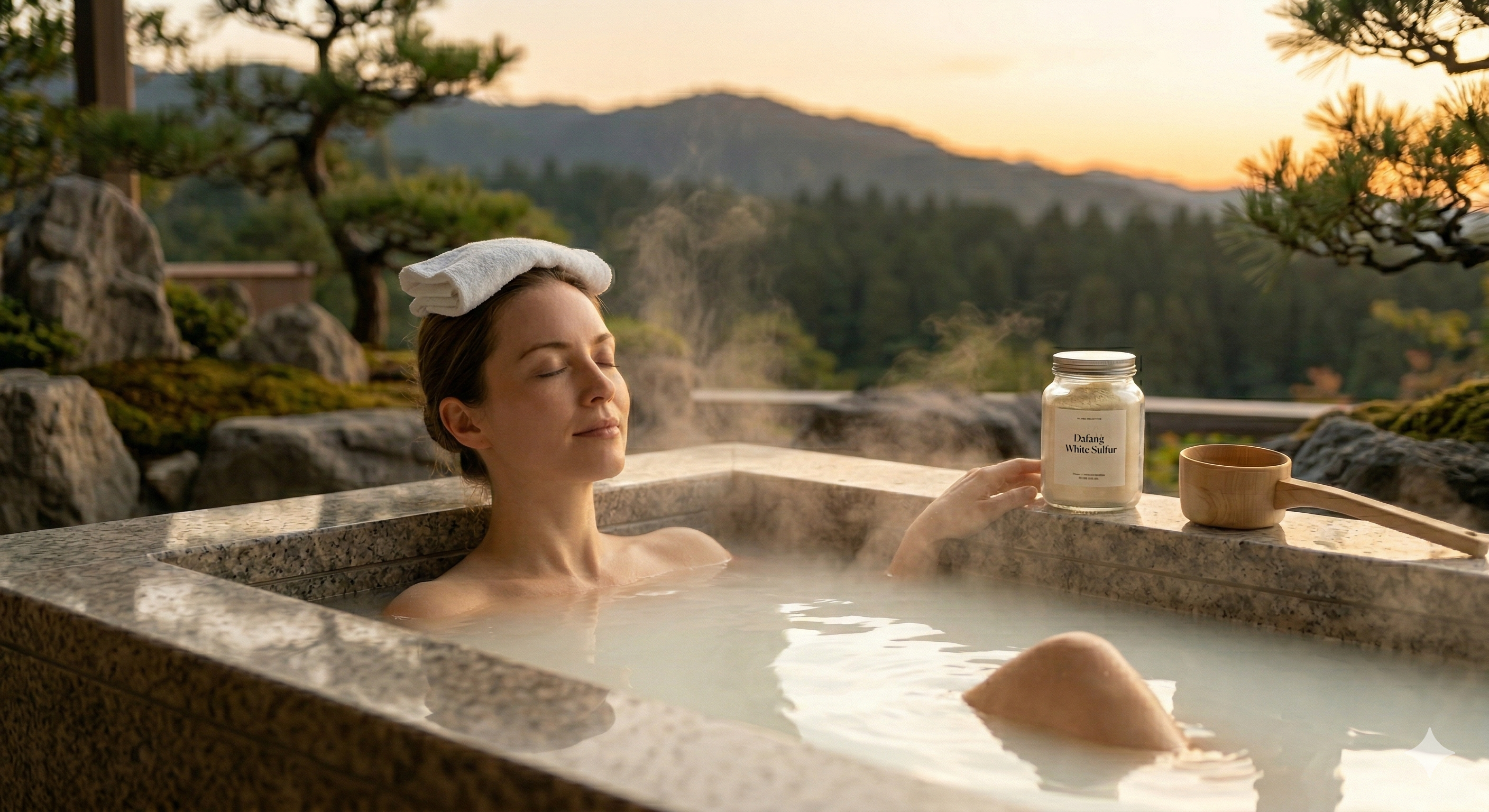
You have likely seen images of Japanese bathers with a small folded towel balanced on their heads. This isn't a fashion statement; it’s a physiological safeguard. A towel soaked in cool water prevents "head rush" (congestion) while the body is immersed in high-temperature mineral water.
4. The Tattoo Taboo: Tradition vs. Modernity
Historically associated with organized crime, tattoos are now becoming a form of art. While many traditional inns (Ryokans) still maintain restrictions, the industry is pivoting with "Kashikiri" (private family baths) and "Onsen stickers," showing a culture adapting to a globalized audience.
II. The Science of the Soak: Why It Works
🔎 Scientific Report (1): Sleep Quality and Thermoregulation
English Title: Hot spring bathing improves sleep, stress response, and blood pressure in middle-aged adults.
Chinese Title: 溫泉沐浴改善中年人睡眠、壓力反應與血壓的研究
Summary: Published in the Journal of Alternative and Complementary Medicine, this study proves that immersion in thermal water (approx. 40°C to 42.5°C) before bedtime significantly improves sleep efficiency. By raising the core temperature and allowing it to drop rapidly afterward, the body enters a state of deep "Delta-wave" sleep faster.
🔎 Scientific Report (2): The Anti-Inflammatory Power of Sulfur
English Title: Sulphur-Containing Hot Spring Water Therapeutic Effects on Various Diseases: A Narrative Review (2024)
Chinese Title: 含硫溫泉水對多種疾病的治療效果:敘事性回顧
Summary: This review in ScienceDirect explores the role of sulfur—the "Soul of the Onsen." Sulfur molecules penetrate the skin barrier to exert anti-inflammatory effects. It confirms that sulfur-rich baths (like the White Sulfur found in Beitou) are highly effective in treating psoriasis, eczema, and chronic joint pain.
III. Translating Tradition into a Home Spa Strategy
At Dafang White Powder Factory, we specialize in the extraction of Natural White Sulfur Yunohana. It takes nearly two tons of raw spring water to produce just one gram of this precious mineral sediment. This is the difference between "perfumed water" and a "therapeutic mineral soak." We are selling the ability to detoxify the skin and soothe the nervous system in the comfort of one's home.
IV. FAQ
Q1: What is the difference between "Japanese Bath Additives" and regular Bath Salts?A: Regular bath salts are primarily Sodium Chloride. Japanese onsen powder contains specific therapeutic minerals such as Sulfur and Magnesium, which are clinically proven to aid skin repair and muscle relaxation.
Q2: Can I use White Sulfur powder in a modern acrylic bathtub?A: Yes. Natural extracts like those from Dafang White Powder Factory are bath-friendly. Simply rinse the tub with fresh water after use to prevent mineral buildup.
Q3: How long should I soak for maximum benefit?A: Research suggests a 10-15 minute soak at a temperature of 40°C to 42°C is the "Sweet Spot" for improving circulation without cardiovascular strain.
Further Reading
Carbonate, Sulfate, or Natural Tanghua? A Professional Guide to Ingredients and Recovery Efficacy
TAGS:#JapaneseBathingCulture #OnsenExperience #BathAdditives #JapaneseBathPowder #NaturalOnsen #WhiteSulfur #BeitouHotSpring #HomeSpaRitual #SleepImprovement #StressRelief #MineralBath #DafangWhitePowder #DetoxBath #HealthAndWellness #PassiveHeating