

Other language versions: 繁體中文 · 日本語
The short version
Every change of season, and in the days around a front, plenty of people find a knee, the lower back or the neck and shoulders stiffer than usual. That sense that the body knows before the forecast does has long been filed away as the sort of thing older relatives say. Over the past decade, researchers in the UK, Norway, Japan and Taiwan have put it to the test with smartphone diaries, national insurance records and laboratory measurement, and what comes back is more finely grained than you might expect.
The evidence as it stands points to three things. First, the association between weather and pain is real but the effect is small: a UK smartphone study of more than 13,000 people found that the least favourable combination of weather raised the odds of a pain exacerbation by only about 20%, and that only a minority of people are sensitive to any particular kind of weathernote 1note 2. Second, rather than cold itself, high humidity, lower barometric pressure and a wide day-to-night temperature swing are what the research keeps catching, and in East Asia the peak falls in spring instead of winternote 3note 4. Third, heat packs and baths were associated in trials with improvements in pain, stiffness and fatigue; the effect comes from blood flow and tissue extensibility, and it does not repair the jointnote 5note 6.
This article gathers more than 40 studies, published from 2003 onwards and weighted towards the past decade, and works through them in order: who actually feels it, which weather measure has the most support behind it, and what heat and a bath can do.
Joints as a live weather station? What the large studies say
The "Cloudy with a Chance of Pain" project run by a team at the University of Manchester and published in npj Digital Medicine (Dixon et al., 2019) recruited more than 13,000 people living with chronic pain, had them record their pain daily on a phone, matched each entry against local hourly weather, and followed them for 15 monthsnote 1. The main analysis covered 2,658 people. Every 10 percentage point rise in relative humidity carried an odds ratio of 1.139 for a pain exacerbation event; every 10 mbar rise in pressure carried an odds ratio of 0.962, which is to say the lower the pressure, the more likely the pain; temperature showed no significant association. With mood and physical activity added to the model, the humidity and pressure associations held. The authors' conclusion was that the associations are statistically significant but modest in size: the worst combination of weather carried roughly 20% more pain events than an average day.
Taking the same data apart a layer further makes it more interesting still. Yimer et al. (2022) ran a Bayesian multilevel model person by person and found that only 1 person in 10 was sensitive to temperature, 1 in 25 to humidity and 1 in 50 to pressure, and that the direction varied between individuals: some hurt more in the cold, others more in the heatnote 2. Put another way, "everyone aches when the weather turns" does not hold up, while "some people really do" has data behind it.
The evidence on the other side is of equally high grade. A meta-analysis from a team at the University of Sydney, published in Seminars in Arthritis and Rheumatism (Ferreira et al., 2024), pooled 11 case-crossover studies (a design in which each person's own different time periods serve as each other's controls) covering 15,315 people, and found no association between humidity, pressure, temperature or rainfall and flares of rheumatoid arthritis, knee pain or low back pain. The single exception was gout, where high temperature combined with low humidity carried an odds ratio of 2.04 for a flarenote 7. This does not contradict Dixon: one is looking at the daily ups and downs of people already living with chronic pain, the other at whether an acute flare gets triggered by weather.
One more line of work sidesteps the problem of self-report altogether. The Tromsø study from a team at the Arctic University of Norway, published in Pain (Farbu et al., 2022), measured pressure pain and cold pain tolerance in more than 18,000 members of the general population aged 40 and over, and found that tolerance shifted with the season and with short-term weather, with temperature and pressure able to predict pressure pain tolerance several days aheadnote 8. This, the authors write, supports the common belief that weather affects pain.
Pressure, humidity, temperature swing: which measure has the most support?
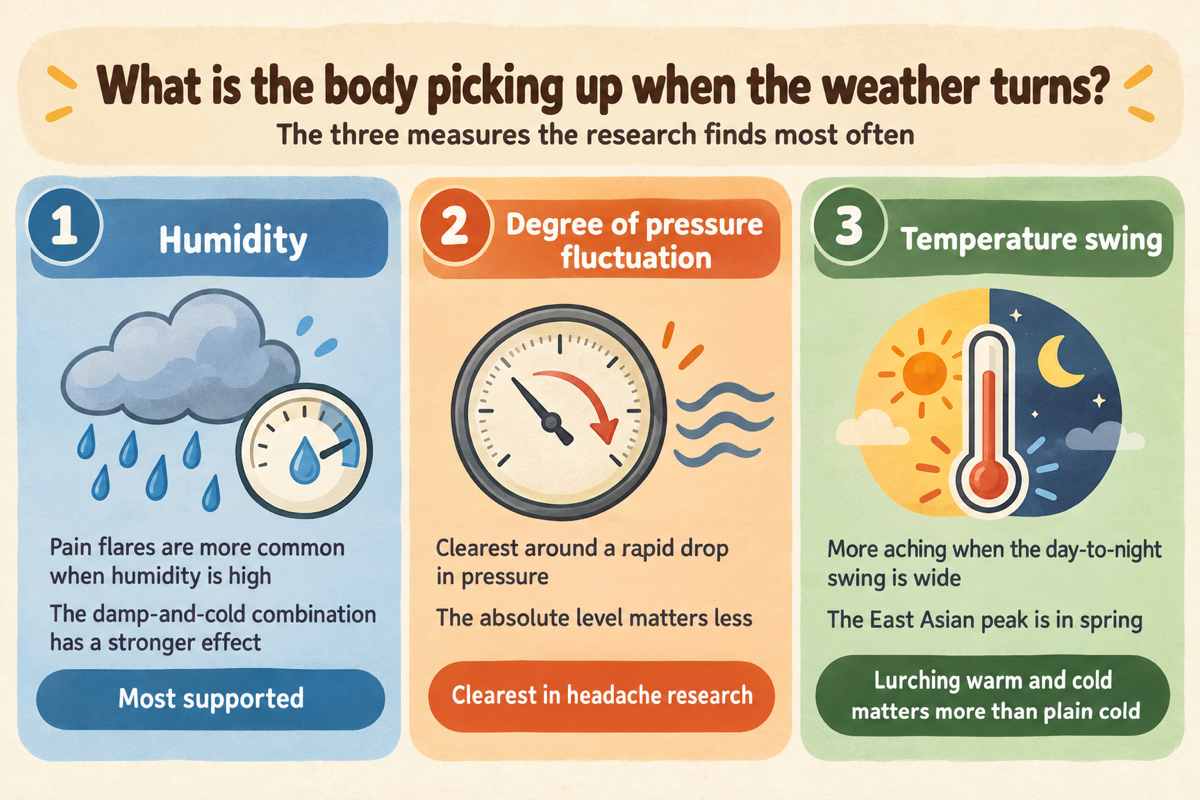
Lay the past decade of research out side by side and the measure with the most support behind it is humidity; cold comes further down the list. Beyond Dixon, the six-country European study from a team at VU Amsterdam, published in the Journal of Rheumatology (Timmermans et al., 2015), followed 810 people aged 65 to 85 with osteoarthritis (the wear-related joint disease) and found daily mean humidity associated with pain, with the humidity effect stronger at relatively low temperaturesnote 3. Damp and cold together is precisely the weather Taiwan sees most in autumn and winter.
Pressure is the second. It is the degree of fluctuation in pressure that shows up most clearly, in headache research, with the absolute level of pressure mattering less. A big-data study from a Japanese team published in Headache (Katsuki et al., 2023) analysed 4,375 users of a headache app and 336,951 hourly headache records, and found that "a significant drop in barometric pressure 6 hours earlier" was the single strongest predictive feature, with low pressure, high humidity and rainfall also associatednote 9. On mechanism, the team led by Jun Sato in Japan observed in mice that a pressure fall of only 20 to 40 hPa, about what the passage of a low pressure system delivers, was enough to activate the vestibular ganglion of the inner ear, which led the authors to call the inner ear a barometric pressure sensornote 10. That is an animal experiment and cannot be carried straight across to people, but it does explain why some of us get a headache or feel dizzy before the rain arrives.
For joints, the evidence on pressure is more divided. A meta-analysis from a Chinese team published in Annals of Medicine (Wang et al., 2023) pooled 14 osteoarthritis studies and found pressure positively correlated with pain and temperature negatively correlated with itnote 11, the opposite direction to Dixon. The study designs and the populations differ in both cases, and there is currently no way to settle which is right.
The third is the temperature swing. A hip osteoarthritis study from an Australian team published in the Scandinavian Journal of Rheumatology (Fu et al., 2021) found that of all the weather variables, only "the daily temperature range over the preceding 72 hours" showed a dose-response relationship with pain exacerbation; maximum temperature, minimum temperature, humidity, rainfall and pressure were all unrelatednote 12. Hospital admission data for rheumatoid arthritis in Anqing, China (Huang et al., 2022) likewise showed admission risk rising when the daily temperature range was wide or the temperature extremely lownote 13, and the nationwide Korean data on temporomandibular disorders (Lee and Chung, 2024) states that the correlation with temperature difference was "stronger than with absolute temperature"note 14.
As for the one everyone mentions, aching joints on a rainy day, the evidence is the weakest of the lot. A study from a team at Harvard University published in the BMJ (Jena et al., 2017) analysed 1,552,842 Americans aged 65 and over across 11,673,392 outpatient visits and found the proportion of visits for joint or back pain on rainy days and non-rainy days to be 6.35% and 6.39%, barely any difference at allnote 15. Rain in itself is not the thing; the shifts in humidity and pressure around the rain are.
The East Asian picture: a spring peak, and in Taiwan, watch the fronts
Osteoarthritis pain in older Europeans runs highest in winter and lowest in autumnnote 16. The East Asian data point to spring. An analysis of NinJa, Japan's national rheumatoid arthritis database (Mori et al., 2019), covering 12,839 patients, found disease activity highest in spring and lowest in autumnnote 4. A multicentre gout study in Korea (Choi et al., 2020) found 43.4% of flares clustered in spring with March the single commonest month, and the median daily temperature range on the day of a flare also largest in spring at 9.8°Cnote 17. All of this lines up with the temperature-swing finding above: in East Asia it is spring's lurching between warm and cold, rather than low temperature on its own, that tends to cause trouble.
Taiwan has no study yet looking directly at joint pain and weather. The closest work is on headache. A study from a team at Taipei Veterans General Hospital published in PLoS ONE (Yang et al., 2011) analysed the diaries of 52 headache patients in greater Taipei and found that variation in headache during the cold season tracked temperature and sunshine, at points in time that coincided with the passage of fronts, with temperature plus sunshine accounting for 33.3% of cold-season headache variancenote 18. The same team's 2015 follow-up says it in its title: patients with migraine are right about their perception of temperature as a trigger. Among patients who considered themselves temperature-sensitive, 29.2% of winter headache variance could be explained by temperature changenote 19.
Japanese research into "weather pain" (気象病) fills in the picture for the general population. A questionnaire survey of a Japanese health-screening population (Akaishi et al., 2023) found 32% of people reporting bad-weather-related symptoms, headache the commonest at 67%, followed by low back pain at 21%, fatigue at 19% and neck and shoulder stiffness at 12%, with those affected skewing youngernote 20. The widely repeated line that ten million people in Japan have weather pain has no peer-reviewed source behind it and is not used in this article.
Who is more sensitive to a change in the weather?
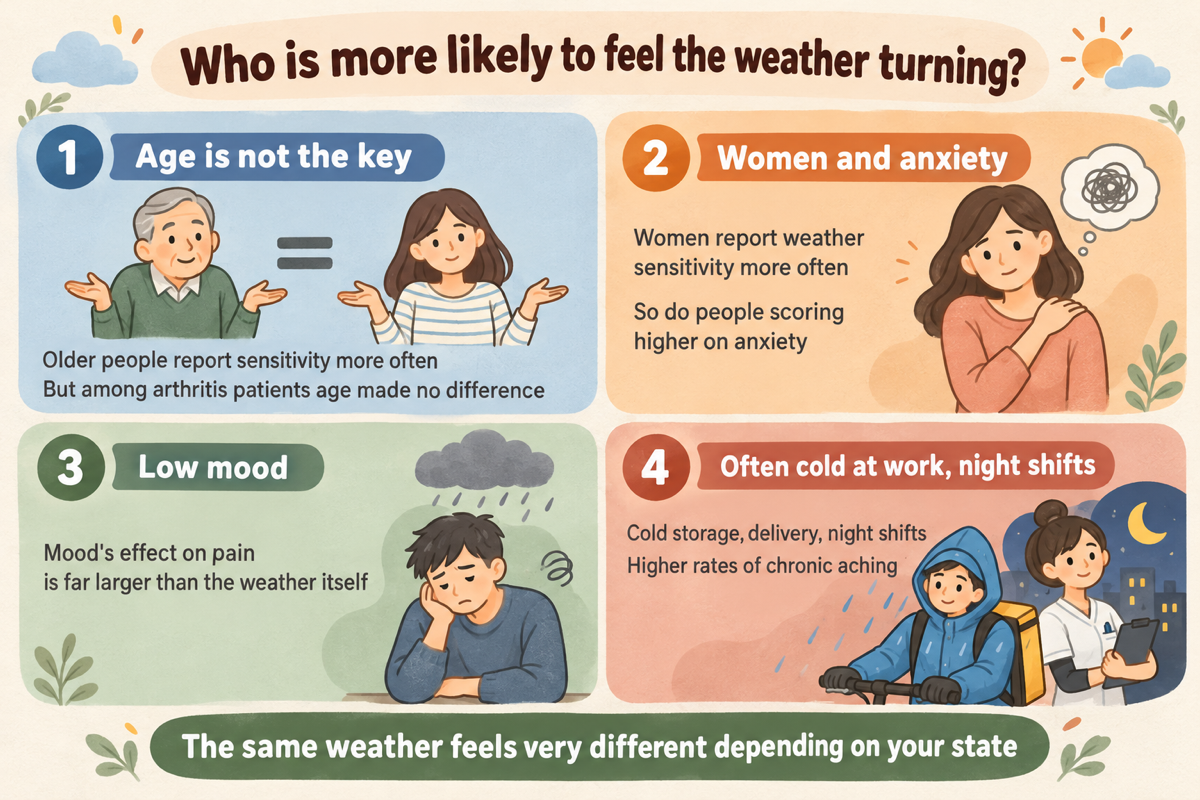
Age is not the deciding factor. Representative surveys in Germany and Canada (von Mackensen et al., 2005) found self-reported weather sensitivity highest among those over 60, at 68% and 69% respectively in the two countriesnote 21. Yet among European adults aged 65 to 85 who already had osteoarthritis (Timmermans et al., 2014, 712 people), age had no bearing on whether someone was weather-sensitive. Being a woman (odds ratio 1.94) and scoring higher on anxiety were the independent predictors, and southern Europeans considered themselves sensitive more often than northern Europeansnote 16. That self-identified sensitive group made up 67.2% of the sample, with a pain score of 4.1 against 3.1 among those who were not sensitive.
A knee osteoarthritis study in Shanghai (Xue et al., 2021, 80 people) set sensitivity alongside joint structure: 57.5% of patients considered themselves weather-sensitive, and that group carried an odds ratio of 3.3 for knee pain and 5.5 for functional disability, with higher rates of cartilage defects and bone marrow lesions as wellnote 22. This suggests that among people whose joint structure already shows degeneration, the proportion who are weather-sensitive is considerable, and that their overall joint condition may also be the more serious.
Mood matters a great deal more than the weather itself. In the Dixon et al. (2019) data, low mood on the day carried an odds ratio for a pain event as high as 4.08, against roughly 20% more for the worst combination of weathernote 1. Norwegian work on fibromyalgia (a chronic widespread pain condition; Fagerlund et al., 2019) likewise found that a sense of stress amplified the association between low pressure and painnote 23. None of this means the pain is imagined. It means that the same weather feels very different to people in different states.
Occupation is another thread. An analysis of 6,533 working people in the Norwegian Tromsø study (Farbu et al., 2019) found that those who "often" felt cold at work carried an odds ratio of 3.90 for chronic pain at three or more sitesnote 24, and a Swedish prospective follow-up (Lewis et al., 2023, 3,843 people) confirmed that high occupational cold exposure was associated with new-onset neck and shoulder pain (odds ratio 1.59) and low back pain (1.61) six years laternote 25. Shift work comes at it from another direction: an Austrian experiment (Pieh et al., 2018) gave healthy night-shift workers the same cold pain stimulus and found pain scores 28% higher after a 12-hour night shift, returning to baseline only after a night's restnote 26. For delivery riders, cold storage workers and night-shift nurses, all common enough patterns of work in Taiwan, these findings are worth noting.
Beyond the joints: heaviness, aching and fatigue, do they track the weather too?
Plenty of people cannot name a particular joint when the weather turns and simply feel heavy all over. A population study in north west England (Macfarlane et al., 2010, 2,491 people) found 22.2% reporting chronic widespread pain in winter against 9.5% in summer; on days with ample sunshine and higher temperatures, the prevalence ratio for chronic widespread pain fell to 0.56 and 0.40 respectively, and part of that effect was transmitted through physical activity, sleep and moodnote 27. The authors note specifically that pain is "not an inevitable consequence" of such climatic conditions.
Data on fibromyalgia patients is a caution against reading too much into any of this. A 28-day diary study of 333 women with fibromyalgia in the Netherlands (Bossema et al., 2013) ran 50 analyses, of which only 5 were significant and those with small effects; the authors concluded that the evidence against a consistent influence of weather outweighed the evidence for itnote 28. On fatigue, a follow-up of 58 chronic fatigue syndrome patients in the United States (Jones et al., 2024) observed that days of heavier fatigue were associated with lower pressure, again with a small effectnote 29. Taken together, the association between feeling heavy and the weather does exist, but individual variation is far larger than the weather itself.
Heat packs and baths
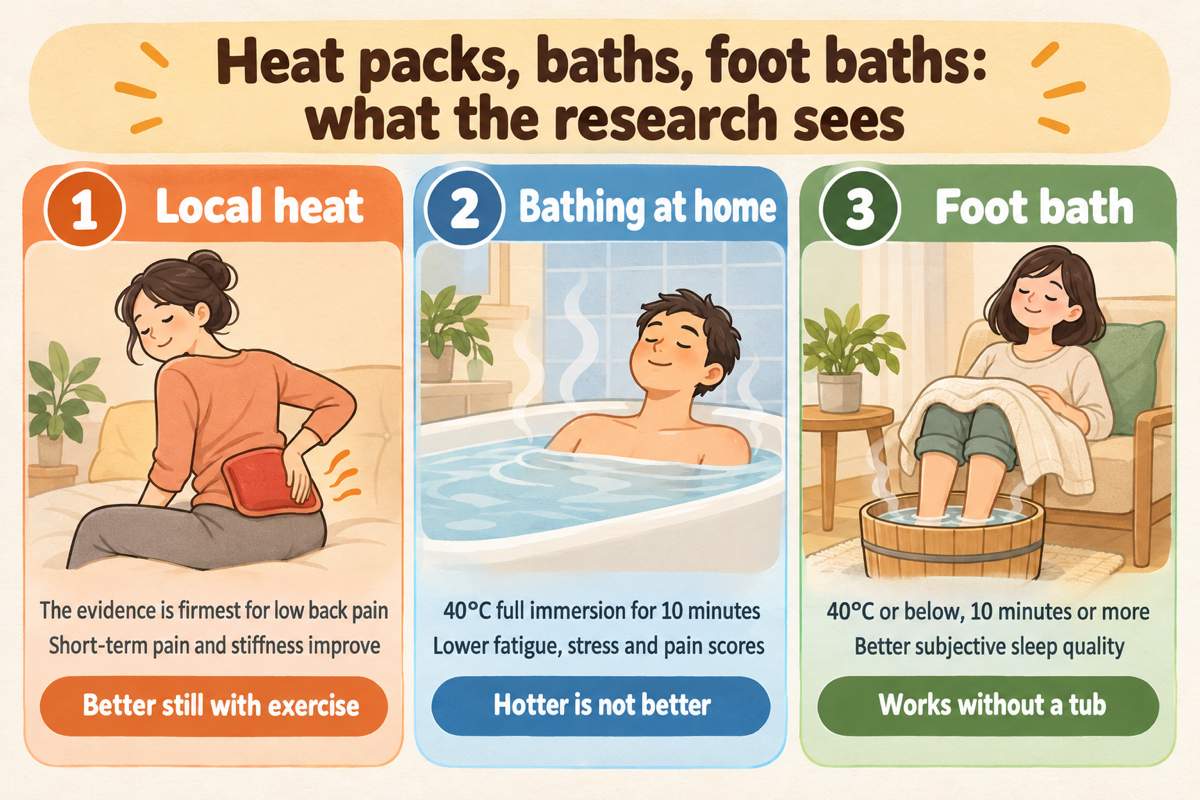
Start with the mechanism. The physiological action of thermotherapy (heat packs and warm immersion, as they are called throughout this article) is reasonably well established: a review from an American team published in Pain Physician (Nadler et al., 2004) notes that warmth raises tissue metabolism, blood flow and connective tissue extensibility while reducing muscle spasmnote 5. A systematic review of 36 studies in healthy people (Bleakley and Costello, 2013) found that heat increases range of movement, and that heat combined with stretching is more effective than stretching alonenote 30. A review from a European team (Freiwald et al., 2021) adds that a rise of just 1°C in tissue temperature is associated with a 10 to 15% increase in local metabolismnote 31. This is the basis for getting stiff tissue moving more easily. It is not joint repair.
The clinical evidence for local heat is firmest in low back pain. A Cochrane systematic review (French et al., 2006) pooled 9 trials and 1,117 people and concluded that there is moderate evidence for heat wrap therapy providing a small short-term reduction in pain and disability in acute and subacute low back pain, and that adding exercise works better stillnote 32. Heat trials in knee osteoarthritis are smaller in scale. A Turkish study (Yildirim et al., 2010) had patients apply heat for 20 minutes every other day over 4 weeks and found larger improvements in pain and disability scores than in a control group on medication alonenote 33. An earlier Cochrane review (Brosseau et al., 2003) notes, though, that hot packs had no beneficial effect on knee oedemanote 34.
Trials of balneotherapy (spa therapy, as it is called here) have mostly been run at European medical spas. A French multicentre trial (Forestier et al., 2010, 382 people) gave knee osteoarthritis patients an 18-day spa course of mud packs, pools and massage, and at 6 months 50.8% had reached a minimal clinically important improvement against 36.4% of controls, with no difference on the quality of life scalesnote 35. The same team's newer trial (Forestier et al., 2025, 145 people) used four daily items of 10 minutes each, hydrotherapy at 34 to 38°C alongside mud packs at 45°C, and found a between-group difference of 11.7 points in WOMAC function score at 6 monthsnote 36. A meta-analysis pooling 11 mud therapy trials (Hou et al., 2020, 1,106 people) arrived at a standardised mean difference of −0.74 for pain, a moderate effect, and one confined to the short term after the course endednote 37.
The research on bathing at home comes from Japan. A randomised crossover trial (Goto et al., 2018, 38 people) had participants immerse themselves fully for 10 minutes a day at 40°C for 2 weeks, and compared that against 2 weeks of showering only: fatigue scored 42.0 against 52.2, stress 39.2 against 50.7 and pain 16.2 against 23.5 on a 0 to 100 scale, all lower during the bathing periodnote 6. This is a small sample using self-report scales, but it maps directly onto the everyday situation of feeling heavy all over when the weather turns. On longer-term data, a 3-year follow-up of 13,786 Japanese adults aged 65 and over (Yagi et al., 2019) found that people bathing 7 or more times a week had a lower risk of developing functional disability than those bathing 0 to 2 times a week, at a hazard ratio of 0.72note 38. That is an association, not causation; people who bathe frequently may well have been healthier to begin with.
A foot bath is the option when there is no tub. A meta-analysis from a Taiwanese team (Chang et al., 2025) pooled 18 studies and 950 adults aged 60 and over and found warm foot baths associated with improvement in subjective sleep quality, with the effect clearer at water temperatures of 40°C or below, immersion of 10 minutes or more, and a course lasting a week or longernote 39. A meta-analysis measuring objective indices by polysomnography (Shanmugam et al., 2025), however, did not reach statistical significancenote 40. For water temperature and timing in a foot bath, see our earlier article, How Warm Is a 41°C Footbath? Water Temp, Timing & a 10-Minute Pre-Sleep Ritual.
Hotter is not better. A physiological study in Japan (Kataoka et al., 2005) compared 15-minute baths at 38°C and 41°C and found heart rate rising and parasympathetic indices falling continuously at 41°C, which led the authors to recommend 5 minutes or less at 41°C and 10 minutes or less at 38°Cnote 41. Another heart rate variability analysis (Xu et al., 2021) likewise showed most relaxation-related indices falling as water temperature rosenote 42. Nadler et al. (2004) add a caution that people with diabetes, poor circulation or reduced sensation carry a risk of burns from heat therapynote 5.
Traditional Chinese medicine classifies weather-related aching as cold-dampness obstruction, and its treatment emphasises warming and unblocking: a clinical trial in China (Ni et al., 2024) describes the formulating principle of such prescriptions as warming yang, dispelling dampness, relaxing muscles and activating collateralsnote 43, and warm needling and moxibustion likewise have warmth as their core stimulus. Modern research tests the same ground using weather variables such as humidity and pressure, and the results are not consistent: cross-sectional data on 25,411 people in China (Di et al., 2026) found a U-shaped relationship between relative humidity and arthritis prevalence, with prevalence higher at both the dry and the damp endsnote 44.
When the weather keeps shifting, how do you look after your joints and the rest of you?
The research offers no formula that fits everybody, but several directions follow directly from the literature.
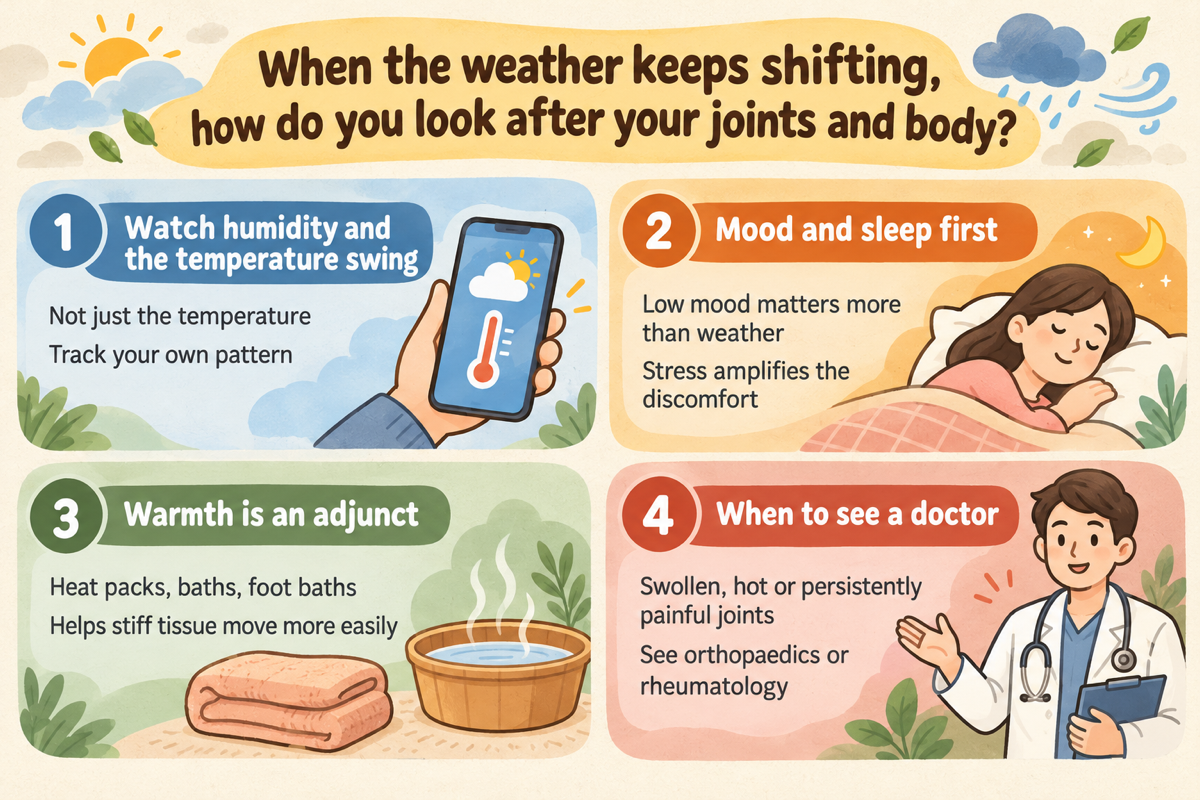
- Watch humidity and the temperature swing, not just the temperature: what turns up most often in the studies is the damp-and-cold combination and the daily temperature range. At the turn of a season, noting "how many degrees colder is today than yesterday" and "is the humidity high" sits closer to the research than watching the temperature alone. If you are the sort of person who keeps records, try setting your daily joint sensations against the weather for a month or two and look for your own pattern.
- Deal with mood and sleep first: low mood has a far larger effect on pain than weather doesnote 1, and stress amplifies the pressure effectnote 23. When a change in the weather leaves you feeling particularly rough, asking yourself how you have been sleeping and how much pressure you are under is usually more use than blaming the sky. On how autumn's shortening daylight affects sleep, see Sleepy Earlier, Awake at Four? How Autumn's Shorter Days and Cooler Nights Actually Affect Sleep.
- The place that keeping warm matters most is at work: people working in cold environments, and people who often feel cold while working, carry markedly higher odds of chronic painnote 24note 25. For anyone on delivery, in cold storage or on night shifts, an extra layer and a fixed warming-up break are what the literature supports most directly.
- Keep moving: weather-sensitive people in these studies had higher rates of functional disabilitynote 22, and everybody's activity levels fall in winter. Not letting a joint stay fixed in one position for long stretches, as the weather cools, is the basic direction of everyday care. On low back trouble for people who sit all day, see Low Back Sore After Sitting All Day? Where Heat and a Bath Actually Belong.
- Treat heat packs and baths as an adjunct: when muscles are tight and joints stiff, local heat or warm immersion at 38 to 40°C for around 10 minutes matches the mechanism and the trial settings recorded in the literaturenote 5note 6note 41. Above 41°C, shorten the time. For the neck and shoulders, see Does Heat Help Neck and Shoulder Pain? Where Movement, Strength Training, Local Heat and a Bath Each Belong|DaFang 1956; for the difference between a hot spring and an ordinary hot bath, see Is a hot spring better than a hot bath? Heat, water pressure and buoyancy, and what the balneotherapy evidence really shows; and if there is no tub at home, see No Bathtub? No Problem. A Complete Guide to Foot Baths, Half Baths, and Full Baths with Beitou White Sulfur Powder. On nighttime stiffness after 50, we have also written Mobility Care After 50: The Secret of a Construction Contractor — How to Relieve Nighttime Stiffness at Home with Beitou Hot Spring Mud?.
- When to see a doctor: swelling, heat or persistent pain in a joint, or anything that is already restricting how you move, is worth taking to an orthopaedic or rheumatology specialist. Weather sensitivity is not a diagnosis in itself, but it may be a signal about the state of a joint.
FAQ
Q: Does a drop in barometric pressure always make joints hurt more?
Not necessarily. The large UK study found only about 1 in 50 people with chronic pain to be pressure-sensitivenote 2. The association between falling pressure and headache is clearest in the Japanese big-data worknote 9, while for joint pain the evidence is dividednote 11.
Q: If the research says weather has no significant effect on arthritis, does that mean what I feel is wrong?
No. Meta-analysis finds no consistent effect overallnote 7, but person-by-person analysis shows that a minority of people genuinely are sensitive to particular kinds of weather, with the direction varying between themnote 2. The objective Norwegian measurements also support weather changing pain tolerancenote 8.
Q: Can a bath "protect" a joint or "drain dampness"?
The trials so far have observed warm immersion to be associated with improvements in pain, stiffness and fatigue, by way of blood flow and tissue extensibilitynote 5note 6. "Protecting the joint" and "preventing degeneration" have no support in the literature, and "draining dampness" is a traditional Chinese medicine formulation with no corresponding measurable indexnote 43note 44.
Q: Do weather-sensitive people need to see a doctor?
Weather sensitivity on its own, no. But if a joint is already swollen, hot, persistently painful or restricting movement, an assessment is advisable.
Further reading
- How Warm Is a 41°C Footbath? Water Temp, Timing & a 10-Minute Pre-Sleep Ritual
- Low Back Sore After Sitting All Day? Where Heat and a Bath Actually Belong
- Mobility Care After 50: The Secret of a Construction Contractor — How to Relieve Nighttime Stiffness at Home with Beitou Hot Spring Mud?
- Does Heat Help Neck and Shoulder Pain? Where Movement, Strength Training, Local Heat and a Bath Each Belong|DaFang 1956
- Is a hot spring better than a hot bath? Heat, water pressure and buoyancy, and what the balneotherapy evidence really shows
- No Bathtub? No Problem. A Complete Guide to Foot Baths, Half Baths, and Full Baths with Beitou White Sulfur Powder
- Sleepy Earlier, Awake at Four? How Autumn's Shorter Days and Cooler Nights Actually Affect Sleep
Sources
- Dixon, W. G., Beukenhorst, A. L., Yimer, B. B., et al. (2019). How the weather affects the pain of citizen scientists using a smartphone app. npj Digital Medicine, 2, 105. https://doi.org/10.1038/s41746-019-0180-3
- Yimer, B. B., Schultz, D. M., Beukenhorst, A. L., et al. (2022). Heterogeneity in the association between weather and pain severity among patients with chronic pain: A Bayesian multilevel regression analysis. Pain Reports, 7(1), e963. https://doi.org/10.1097/PR9.0000000000000963
- Timmermans, E. J., Schaap, L. A., Herbolsheimer, F., et al. (2015). The influence of weather conditions on joint pain in older people with osteoarthritis: Results from the European Project on OSteoArthritis. Journal of Rheumatology, 42. https://doi.org/10.3899/jrheum.141594
- Mori, H., Sawada, T., Nishiyama, S., et al. (2019). Influence of seasonal changes on disease activity and distribution of affected joints in rheumatoid arthritis. BMC Musculoskeletal Disorders, 20, 30. https://doi.org/10.1186/s12891-019-2418-2
- Nadler, S. F., Weingand, K., & Kruse, R. J. (2004). The physiologic basis and clinical applications of cryotherapy and thermotherapy for the pain practitioner. Pain Physician, 7. https://doi.org/10.36076/ppj.2004/7/395
- Goto, Y., Hayasaka, S., Kurihara, S., & Nakamura, Y. (2018). Physical and mental effects of bathing: A randomized intervention study. Evidence-Based Complementary and Alternative Medicine, 2018, 9521086. https://doi.org/10.1155/2018/9521086
- Ferreira, M. L., Zhang, Y., Pinheiro, M. B., et al. (2024). Come rain or shine: Is weather a risk factor for musculoskeletal pain? A systematic review with meta-analysis of case-crossover studies. Seminars in Arthritis and Rheumatism, 65, 152392. https://doi.org/10.1016/j.semarthrit.2024.152392
- Farbu, E. H., Rypdal, M., Skandfer, M., et al. (2022). To tolerate weather and to tolerate pain: Two sides of the same coin? The Tromsø Study 7. Pain, 163. https://doi.org/10.1097/j.pain.0000000000002437
- Katsuki, M., Tatsumoto, M., Kimoto, K., et al. (2023). Investigating the effects of weather on headache occurrence using a smartphone application and artificial intelligence: A retrospective observational cross-sectional study. Headache, 63. https://doi.org/10.1111/head.14482
- Sato, J., Inagaki, H., Kusui, M., et al. (2025). The inner ear is a barometric pressure sensor—change in barometric pressure induces vestibular ganglion cell activation. Scientific Reports, 15. https://doi.org/10.1038/s41598-025-28093-4
- Wang, L., Xu, Q., Chen, Y., et al. (2023). Associations between weather conditions and osteoarthritis pain: A systematic review and meta-analysis. Annals of Medicine, 55(1), 2196439. https://doi.org/10.1080/07853890.2023.2196439
- Fu, K., Metcalf, B., Bennell, K. L., et al. (2021). Association of weather factors with the risk of pain exacerbations in people with hip osteoarthritis. Scandinavian Journal of Rheumatology, 50. https://doi.org/10.1080/03009742.2020.1760929
- Huang, L. J., Zha, J. J., Cao, N. W., et al. (2022). Temperature might increase the hospital admission risk for rheumatoid arthritis patients in Anqing, China: A time-series study. International Journal of Biometeorology, 66. https://doi.org/10.1007/s00484-021-02207-9
- Lee, Y. H., & Chung, J. W. (2024). Climate temperature and seasonal influences on the prevalence of temporomandibular disorders in South Korea. Scientific Reports, 14. PMID 38744911.
- Jena, A. B., Olenski, A. R., Molitor, D., & Miller, N. (2017). Association between rainfall and diagnoses of joint or back pain: Retrospective claims analysis. BMJ, 359, j5326. https://doi.org/10.1136/bmj.j5326
- Timmermans, E. J., van der Pas, S., Schaap, L. A., et al. (2014). Self-perceived weather sensitivity and joint pain in older people with osteoarthritis in six European countries: Results from the European Project on OSteoArthritis (EPOSA). BMC Musculoskeletal Disorders, 15, 66. https://doi.org/10.1186/1471-2474-15-66
- Choi, H. J., Lee, S., Lee, J. Y., et al. (2020). Seasonal variations and associated factors of gout attacks: A prospective multicenter study in Korea. Journal of Korean Medical Science, 35, e133. https://doi.org/10.3346/jkms.2020.35.e133
- Yang, A. C., Fuh, J. L., Huang, N. E., et al. (2011). Temporal associations between weather and headache: Analysis by empirical mode decomposition. PLoS ONE, 6(1), e14612. https://doi.org/10.1371/journal.pone.0014612
- Yang, A. C., Fuh, J. L., Huang, N. E., et al. (2015). Patients with migraine are right about their perception of temperature as a trigger: Time series analysis of headache diary data. Journal of Headache and Pain, 16, 49. https://doi.org/10.1186/s10194-015-0533-5
- Akaishi, T., Tanaka, J., Abe, M., & Ishii, T. (2023). Bad weather-related physical conditions in Japanese adults: A cross-sectional study. Cureus, 15, e50642. https://doi.org/10.7759/cureus.50642
- von Mackensen, S., Hoeppe, P., Maarouf, A., Tourigny, P., & Nowak, D. (2005). Prevalence of weather sensitivity in Germany and Canada. International Journal of Biometeorology, 49. https://doi.org/10.1007/s00484-004-0226-2
- Xue, Y., Chen, Y., Jiang, D., et al. (2021). Weather sensitivity in knee osteoarthritis: Associations with pain, functional disability, and structural lesions. Rheumatology and Therapy, 8(4), 1671–1683. https://doi.org/10.1007/s40744-021-00340-w
- Fagerlund, A. J., Iversen, M., Ekeland, A., Moen, C. M., & Aslaksen, P. M. (2019). Blame it on the weather? The association between pain in fibromyalgia, relative humidity, temperature and barometric pressure. PLoS ONE, 14(5), e0216902. https://doi.org/10.1371/journal.pone.0216902
- Farbu, E. H., Skandfer, M., Nielsen, C., et al. (2019). Working in a cold environment, feeling cold at work and chronic pain: A cross-sectional analysis of the Tromsø Study. BMJ Open, 9(11), e031248. https://doi.org/10.1136/bmjopen-2019-031248
- Lewis, C., Stjernbrandt, A., & Wahlström, J. (2023). The association between cold exposure and musculoskeletal disorders: A prospective population-based study. International Archives of Occupational and Environmental Health, 96. https://doi.org/10.1007/s00420-022-01949-2
- Pieh, C., Jank, R., Waiß, C., et al. (2018). Night-shift work increases cold pain perception. Sleep Medicine, 45. https://doi.org/10.1016/j.sleep.2017.12.014
- Macfarlane, T. V., McBeth, J., Jones, G. T., Nicholl, B., & Macfarlane, G. J. (2010). Whether the weather influences pain? Results from the EpiFunD study in North West England. Rheumatology, 49. https://doi.org/10.1093/rheumatology/keq099
- Bossema, E. R., van Middendorp, H., Jacobs, J. W., Bijlsma, J. W., & Geenen, R. (2013). Influence of weather on daily symptoms of pain and fatigue in female patients with fibromyalgia: A multilevel regression analysis. Arthritis Care & Research, 65. https://doi.org/10.1002/acr.22008
- Jones, C. L., Haskin, O., & Younger, J. W. (2024). Association between chronic pain and fatigue severity with weather and air pollution among females with myalgic encephalomyelitis/chronic fatigue syndrome (ME/CFS). International Journal of Environmental Research and Public Health, 21. PMID 39767402.
- Bleakley, C. M., & Costello, J. T. (2013). Do thermal agents affect range of movement and mechanical properties in soft tissues? A systematic review. Archives of Physical Medicine and Rehabilitation, 94. https://doi.org/10.1016/j.apmr.2012.07.023
- Freiwald, J., Magni, A., Fanlo-Mazas, P., et al. (2021). A role for superficial heat therapy in the management of non-specific, mild-to-moderate low back pain in current clinical practice: A narrative review. Life, 11(8), 780. https://doi.org/10.3390/life11080780
- French, S. D., Cameron, M., Walker, B. F., Reggars, J. W., & Esterman, A. J. (2006). Superficial heat or cold for low back pain. Cochrane Database of Systematic Reviews, (1), CD004750. https://doi.org/10.1002/14651858.CD004750.pub2
- Yildirim, N., Filiz Ulusoy, M., & Bodur, H. (2010). The effect of heat application on pain, stiffness, physical function and quality of life in patients with knee osteoarthritis. Journal of Clinical Nursing, 19. https://doi.org/10.1111/j.1365-2702.2009.03070.x
- Brosseau, L., Yonge, K. A., Welch, V., et al. (2003). Thermotherapy for treatment of osteoarthritis. Cochrane Database of Systematic Reviews, (4), CD004522. https://doi.org/10.1002/14651858.CD004522
- Forestier, R., Desfour, H., Tessier, J. M., et al. (2010). Spa therapy in the treatment of knee osteoarthritis: A large randomised multicentre trial. Annals of the Rheumatic Diseases, 69. https://doi.org/10.1136/ard.2009.113209
- Forestier, R., et al. (2025). The effectiveness of a 3-week spa therapy on the 6-month mobility and functional ability of patients with knee osteoarthritis: The ANGELLO randomized controlled trial. International Journal of Biometeorology. https://doi.org/10.1007/s00484-025-02927-2
- Hou, C., Liang, L., Chu, X., et al. (2020). The short-term efficacy of mud therapy for knee osteoarthritis: A meta-analysis. Medicine, 99, e19761. https://doi.org/10.1097/MD.0000000000019761
- Yagi, A., Hayasaka, S., Ojima, T., et al. (2019). Bathing frequency and onset of functional disability among Japanese older adults: A prospective 3-year cohort study from the JAGES. Journal of Epidemiology, 29. https://doi.org/10.2188/jea.JE20180123
- Chang, S. Y., et al. (2025). A systematic review and meta-analysis of footbath effects and optimal procedures to improve sleep in older adults. Scandinavian Journal of Caring Sciences. https://doi.org/10.1111/scs.70118
- Shanmugam, P., et al. (2025). Does a hot foot bath improve sleep quality? A systematic review and meta-analysis. Alternative Therapies in Health and Medicine. PMID 40492751.
- Kataoka, Y., & Yoshida, F. (2005). The change of hemodynamics and heart rate variability on bathing by the gap of water temperature. Biomedicine & Pharmacotherapy, 59(Suppl 1). https://doi.org/10.1016/S0753-3322(05)80016-2
- Xu, J., et al. (2021). Water temperature and heart rate variability during bathing. Life, 11(5), 378. https://doi.org/10.3390/life11050378
- Ni, H. Y., et al. (2024). Sanbi decoction combined with glucosamine for cold-dampness type knee osteoarthritis: A randomized controlled trial. World Journal of Clinical Cases, 12. https://doi.org/10.12998/wjcc.v12.i19.3854
- Di, J., et al. (2026). Bidirectional adverse effects of low and high atmospheric humidity on arthritis in middle-aged and older Chinese adults: Evidence from propensity score matching and comprehensive modeling approaches. BMC Public Health. https://doi.org/10.1186/s12889-026-26217-7
Notes
note 1 Dixon et al. (2019). npj Digital Medicine. PMID 31667359. More than 13,000 recruited; main analysis 2,658 people, 15 months, case-crossover. Humidity per +10 percentage points OR 1.139 (95% CI 1.099 to 1.181); pressure per +10 mbar OR 0.962 (0.937 to 0.987); temperature OR 0.996 (0.985 to 1.007), not significant; low mood OR 4.083 (3.824 to 4.360); high activity OR 0.939 (0.881 to 1.002), not significant. Limitations: self-selected smartphone users, 83% women, pain self-reported.
note 2 Yimer et al. (2022). Pain Reports. PMID 35047712. Bayesian multilevel analysis of the same dataset; after adjustment for age, sex, beliefs, mood and activity, 1 in 10 sensitive to temperature, 1 in 25 to humidity, 1 in 50 to pressure, 3 in 100 to wind speed; 72.5% of sensitive individuals were sensitive to only one parameter. Limitations: as Dixon.
note 3 Timmermans et al. (2015). Journal of Rheumatology. PMID 26329341. 810 osteoarthritis patients aged 65 to 85 across six countries, three 2-week pain diaries. Daily mean humidity B = 0.004 (p < 0.01); the humidity effect was stronger at relatively low temperatures; the magnitude of weather change across two consecutive days was not associated with pain. Limitations: observational design, small effect size.
note 4 Mori et al. (2019). BMC Musculoskeletal Disorders. PMID 30658609. Cross-sectional analysis of 12,839 rheumatoid arthritis patients in Japan's NinJa database; DAS28-CRP, SDAI and CDAI all highest in spring and lowest in autumn. Limitations: cross-sectional, with uneven sample sizes across seasons (winter 7,652, summer 916).
note 5 Nadler et al. (2004). Pain Physician. PMID 16858479. Narrative review. Original wording: thermotherapy increases tissue metabolism, blood flow, inflammation, edema, and connective tissue extensibility. The paper also cautions that people with diabetes, multiple sclerosis, poor circulation or spinal cord injury carry a risk of burns. Limitations: review article, no effect sizes.
note 6 Goto et al. (2018). Evidence-Based Complementary and Alternative Medicine. PMID 29977318. 38 people, randomised crossover; 40°C full immersion for 10 minutes daily for 2 weeks against 2 weeks of showering. VAS (0 to 100) fatigue 42.0 vs 52.2 (p = 0.028), stress 39.2 vs 50.7 (p = 0.008), pain 16.2 vs 23.5 (p = 0.040). Limitations: small sample, self-report, no washout period.
note 7 Ferreira et al. (2024). Seminars in Arthritis and Rheumatism. PMID 38340613. 11 case-crossover studies, 15,315 people, 28,010 events; humidity, pressure, temperature and rainfall were not associated with flares of rheumatoid arthritis, knee pain or low back pain; gout at high temperature and low humidity OR 2.04 (95% CI 1.26 to 3.30). Limitations: the outcome is an acute flare, not the day-to-day fluctuation of chronic pain.
note 8 Farbu et al. (2022). Pain. PMID 34510136. Tromsø 7 in Norway, single measurement of pressure pain and cold pain tolerance in more than 18,000 residents aged 40 and over, matched against weather time series; the short-term fluctuation timescale for pressure pain tolerance was 5.1 days (95% CI 4.0 to 7.2), close to that of the weather variables. Limitations: one measurement per person, with inference drawn from population time series.
note 9 Katsuki et al. (2023). Headache. PMID 36853848. 4,375 users of a Japanese headache app, 336,951 hourly headache events; "a significant drop in barometric pressure 6 hours earlier" was the strongest feature (gain 11.7), with low pressure, high humidity and rainfall also associated; model R² about 53%. Limitations: headache rather than joint pain; app users are self-selected.
note 10 Sato et al. (2025). Scientific Reports. PMID 41444276. In mice, after three consecutive pressure reductions of −20 hPa, Arc-positive neurons in the inferior vestibular ganglion increased significantly; the same team in 2019 (PLoS One, PMID 30682203) observed c-Fos expression in the superior vestibular nucleus at −40 hPa. Limitations: animal experiment, cannot be extrapolated directly to humans.
note 11 Wang et al. (2023). Annals of Medicine. PMID 37078741. 14 observational studies; pressure summary r = 0.35 (95% CI 0.15 to 0.53); humidity r = 0.086 (−0.05 to 0.22), not significant; temperature r = −0.36 (−0.54 to −0.16). Limitations: high heterogeneity, and the direction for pressure is the opposite of Dixon's.
note 12 Fu et al. (2021). Scandinavian Journal of Rheumatology. PMID 32614268. Hip osteoarthritis case-crossover, 129 people with a pain exacerbation; the daily temperature range over the preceding 72 hours showed a dose-response relationship with exacerbation (linear trend p = 0.04); maximum temperature, minimum temperature, humidity, rainfall and pressure were unrelated. Limitations: small sample, Australian climate.
note 13 Huang et al. (2022). International Journal of Biometeorology. PMID 34718869. 1,456 rheumatoid arthritis admissions in Anqing between 2015 and 2019; extreme low temperature (3°C) lag 0 to 11 cumulative RR 2.68 (95% CI 1.23 to 5.86); low daily temperature range RR 1.40 (1.03 to 1.91), high daily temperature range RR 1.24 (1.0 to 1.53). Limitations: admission data reflects health-seeking behaviour, which is not the same as pain.
note 14 Lee and Chung (2024). Scientific Reports. PMID 38744911. Korean national health insurance temporomandibular disorder patient counts from 2010 to 2022 against monthly temperature range; winter r = 0.480 (p < 0.01), summer 0.443, spring 0.366. Original wording: Temperature differences demonstrated a significantly stronger correlation with the increase in the number of TMD patients than absolute climate temperatures. Limitations: ecological correlation, not individual level.
note 15 Jena et al. (2017). BMJ. PMID 29237605. 1,552,842 US Medicare enrollees aged 65 and over, 11,673,392 outpatient visits; rainy days against non-rainy days, visits for joint or back pain 6.35% vs 6.39%. Limitations: visits stand in for pain, and mild pain does not lead to a visit.
note 16 Timmermans et al. (2014). BMC Musculoskeletal Disorders. PMID 24597710. 712 osteoarthritis patients aged 65 to 85 across six countries; 67.2% considered themselves weather-sensitive; pain in the sensitive group 4.1 (SD 2.4) against 3.1 (SD 2.4), p < 0.001; women OR 1.94 (95% CI 1.35 to 2.79); anxiety per point OR 1.08 (1.02 to 1.15); age OR 0.99 (0.96 to 1.02); seasonal pain within the sensitive group winter 4.6, spring 4.4, summer 4.0, autumn 3.4; no difference between the groups in time spent outdoors (p = 0.72). Limitations: self-reported sensitivity is subjective.
note 17 Choi et al. (2020). Journal of Korean Medical Science. PMID 32449320. Prospective multicentre study of 205 gout patients; spring flares 43.4% (p < 0.001), March 23.4%; median daily temperature range on the day of a flare spring 9.8°C, winter 9.3, autumn 8.6, summer 7.1 (p = 0.027). Limitations: 94.1% male.
note 18 Yang et al. (2011). PLoS ONE. PMID 21297940. Diaries of 52 headache patients in greater Taipei, analysed by empirical mode decomposition; in the cold season temperature plus sunshine explained 33.3% of headache variance, coinciding in time with the passage of fronts. Limitations: headache rather than joint pain; small sample.
note 19 Yang et al. (2015). Journal of Headache and Pain. PMID 26018293. One year of diaries from 66 migraine patients in Taipei; 51.5% considered themselves sensitive to temperature change; temperature change explained 16.5% of winter headache variance and 9.6% of summer; among those who considered themselves sensitive, 29.2% in winter. Limitations: headache rather than joint pain.
note 20 Akaishi et al. (2023). Cureus. PMID 38229817. Questionnaire of 133 people in a Japanese health-screening population; 32% (95% CI 24 to 40) reported bad-weather-related symptoms; headache 67%, low back pain 21%, fatigue 19%, neck and shoulder stiffness 12%; those affected were younger (p = 0.0014). Limitations: single centre, small sample.
note 21 von Mackensen et al. (2005). International Journal of Biometeorology. PMID 15338386. Representative surveys of 1,064 people in Germany and 1,506 in Canada; self-reported weather sensitivity 54.5% and 61%; highest among those over 60, at 68% and 69%. Limitations: the data are from 2001 and 1994 and are therefore somewhat dated, but no more recent age-stratified survey exists.
note 22 Xue et al. (2021). Rheumatology and Therapy. PMID 34389921. Cross-sectional study of 80 knee osteoarthritis patients in Shanghai; 57.5% considered themselves weather-sensitive; knee pain OR 3.3 (95% CI 1.1 to 9.9), functional disability OR 5.5 (1.8 to 16.8), cartilage defect OR 3.1 (1.1 to 8.5), bone marrow lesion OR 3.0 (1.1 to 8.1). Limitations: small sample, cross-sectional, wide confidence intervals.
note 23 Fagerlund et al. (2019). PLoS ONE. PMID 31075151. 48 fibromyalgia patients in Norway reporting three times a day for 30 days, without knowing that weather data was being collected; low pressure and high humidity were associated with pain; a sense of stress moderated the pressure effect; 8 of the 48 showed the opposite direction. Limitations: small sample.
note 24 Farbu et al. (2019). BMJ Open. PMID 31719082. Tromsø 6 in Norway, 6,533 working people aged 30 to 67; for those spending 25% or more of working hours in cold environments, chronic pain at three or more sites OR 1.57 (95% CI 1.23 to 2.01); feeling cold at work "sometimes" OR 1.58 (1.22 to 2.07), "often" OR 3.90 (2.04 to 7.45). Limitations: cross-sectional.
note 25 Lewis et al. (2023). International Archives of Occupational and Environmental Health. PMID 36592178. 3,843 working people in northern Sweden, prospective follow-up from 2015 to 2021; high occupational cold exposure was associated with new-onset neck and shoulder pain OR 1.59 (95% CI 1.08 to 2.33) and low back pain OR 1.61 (1.13 to 2.29). Limitations: cold exposure was self-reported.
note 26 Pieh et al. (2018). Sleep Medicine. PMID 29680433. Repeated measures in 19 healthy night-shift workers; tonic cold pain VAS 48.2 to 61.7 mm (+28%, Cohen's d = 0.49, p = 0.007), returning to 52.1 after a night's rest. Limitations: very small sample.
note 27 Macfarlane et al. (2010). Rheumatology. PMID 20430867. 2,491 people in north west England; chronic widespread pain 22.2% in winter and 9.5% in summer; sunshine above 5.8 hours PR 0.56 (95% CI 0.38 to 0.84); mean temperature above 17.5°C PR 0.40 (0.34 to 0.48); partly mediated by exercise, sleep and mood. Limitations: cross-sectional.
note 28 Bossema et al. (2013). Arthritis Care & Research. PMID 23737338. Daily pain and fatigue over 28 days in 333 women with fibromyalgia in the Netherlands; of 50 analyses only 5 were significant and those with small effects; 20% of the analyses showed individual variation. Limitations: women only.
note 29 Jones et al. (2024). International Journal of Environmental Research and Public Health. PMID 39767402. 58 women with chronic fatigue syndrome in the United States followed for a mean of 61 days; heavier fatigue was associated with lower pressure (p = 0.048), with a small effect. Limitations: small sample, women only.
note 30 Bleakley and Costello (2013). Archives of Physical Medicine and Rehabilitation. PMID 22885279. 36 studies, 1,301 healthy people; original wording: There was evidence that heat increases ROM, and a combination of heat and stretching is more effective than stretching alone. Limitations: healthy people, and the results could not be pooled.
note 31 Freiwald et al. (2021). Life. PMID 34440524. Narrative review; the full text records a rise of 1°C in tissue temperature as associated with a 10 to 15% increase in local metabolism. Limitations: the author group has consultancy relationships with manufacturers.
note 32 French et al. (2006). Cochrane Database of Systematic Reviews. PMID 16437495. 9 trials, 1,117 people; heat wrap against oral placebo, pain at 5 days WMD 1.06 (95% CI 0.68 to 1.45, on a 0 to 5 scale). Original wording: moderate evidence in a small number of trials that heat wrap therapy provides a small short-term reduction in pain and disability. Limitations: few trials.
note 33 Yildirim et al. (2010). Journal of Clinical Nursing. PMID 20492056. Two groups of 23 each; local heat for 20 minutes every other day over 4 weeks; between-group change in WOMAC pain and disability p < 0.05. Limitations: small sample, not randomised.
note 34 Brosseau et al. (2003). Cochrane Database of Systematic Reviews. PMID 14584019. 3 RCTs, 179 people; original wording: Hot packs had no beneficial effect on edema compared with placebo or cold application. Limitations: few trials and old ones.
note 35 Forestier et al. (2010). Annals of the Rheumatic Diseases. PMID 19734131. Three French spas, ITT 195 against 187; an 18-day course; minimal clinically important improvement at 6 months 50.8% against 36.4% (p = 0.005); no difference on SF-36. Limitations: cannot be blinded.
note 36 Forestier et al. (2025). International Journal of Biometeorology. PMID 40358707. 173 randomised, 145 analysed; 18 days of daily bubble bath, immersion shower, 45°C mud packs to both knees and underwater massage, 10 minutes each; WOMAC function between-group mean difference at 6 months 11.7 (95% CI 8.0 to 15.4). Limitations: the authors are affiliated with the French spa research association; cannot be blinded.
note 37 Hou et al. (2020). Medicine. PMID 32332614. 11 RCTs, 1,106 people; VAS pain SMD −0.74 (95% CI −1.08 to −0.41, I² = 15%); WOMAC pain −0.53, stiffness −0.50, function −0.43; all short-term, at the end of the course. Limitations: most of the primary trials could not be blinded.
note 38 Yagi et al. (2019). Journal of Epidemiology. PMID 30369512. JAGES, 13,786 adults aged 65 and over followed for 3 years; bathing 7 or more times a week against 0 to 2 times, functional disability HR summer 0.72 (95% CI 0.60 to 0.85), winter 0.71 (0.60 to 0.84), adjusted for 14 factors. Limitations: observational, with a possible healthy-person effect.
note 39 Chang et al. (2025). Scandinavian Journal of Caring Sciences. PMID 40973991. 18 studies, 950 adults aged 60 and over; subjective sleep quality SMD −0.76 (95% CI −1.22 to −0.29); water temperature at or below 40°C SMD −1.31, immersion of 10 minutes or more −0.96, intervention of 1 week or more −1.06. Limitations: mostly subjective scales.
note 40 Shanmugam et al. (2025). Alternative Therapies in Health and Medicine. PMID 40492751. 6 RCTs, 176 people, polysomnography; sleep onset latency, total sleep time and sleep efficiency all failed to reach statistical significance. Limitations: few trials.
note 41 Kataoka and Yoshida (2005). Biomedicine & Pharmacotherapy. PMID 16275514. 14 healthy men bathing for 15 minutes; at 38°C heart rate and blood pressure showed no significant change, while at 41°C heart rate rose early and HF fell continuously. Original wording: the optimum period of time for bathing in water 41 degrees C in temperature is 5 min or less, and that for water 38 degrees C in temperature is 10 min or less. Limitations: healthy young men, small sample.
note 42 Xu et al. (2021). Life. PMID 33922202. 10 participants, 150 electrocardiogram recordings, at 36 to 38, 38 to 40 and 40 to 42°C; as water temperature rose, 11 HRV indices fell significantly. Limitations: very small sample.
note 43 Ni et al. (2024). World Journal of Clinical Cases. PMID 38994299. RCT in 110 people with cold-dampness type knee osteoarthritis over 5 weeks; the abstract describes the formulating principle as warming yang, dispelling dampness, relaxing muscles, and activating collaterals. This article cites only its definitional description of cold-dampness and does not cite efficacy.
note 44 Di et al. (2026). BMC Public Health. PMID 41507869. CHARLS, 25,411 people of whom 9,218 had arthritis, cross-sectional; original wording: Both low (Q1) and high (Q3) humidity levels were significantly associated with higher odds of arthritis in fully adjusted models. Limitations: cross-sectional, causation cannot be inferred.