
Every year around the Dragon Boat Festival (Duanwu), three characters keep surfacing in feeds and searches: noon water — in Mandarin, wushui. Some say you absolutely must draw it at midday, some insist it has to come from an old well, and others make it sound almost magical. The more you read, the less certain you feel. What actually is this? Do I have to follow every rule? And if you live in an apartment, have no bathtub, and only get free time after work — can you still take part?
This article isn't here to turn noon water into a catalogue of miracle effects or strict taboos. In the shortest time possible, it sorts out three things: what noon water actually refers to in folk custom, which claims you don't need to take at face value, and — if you'd like to keep a little of the festival's sense of ritual at home — how to do a simple, low-barrier, un-mystical modern home footbath. If you happen to have DaFang 1956 white-sulfur hot-spring powder on hand, the later part of the article explains how it can join in naturally — but it is not the star of this custom.
The 30-second version: In folk custom, noon water usually means water drawn around midday on the Dragon Boat Festival, often seen as a seasonal ritual and a symbol of cleansing. The point isn't any "magical energy" — it's setting aside a little time to care for yourself at a moment in the year that feels especially marked by the season. With nothing more than your own tap water and a basin, you can take part too.
What Is Noon Water? The 30-Second Version
In folk custom, "noon water" usually refers to water taken at the hour of noon on the Dragon Boat Festival — roughly between 11 a.m. and 1 p.m. In some places it's also called "pure-yang water" or "dragon-eye water." For today's reader, the most important thing isn't memorizing every name; it's knowing this up front: this is the language of a seasonal ritual, not a scientific fact.
In other words, you can understand noon water as a living symbol of the Duanwu season. Some people use it to wash their hands or face, or to bathe; others simply keep a basin of water and let themselves slow down at that moment. This article treats it as a cultural story and a lifestyle ritual — not as a health effect or a magic procedure.
Do I Have to Draw It From an Old Well or Mountain Spring?
No. Traditional accounts mention old wells, mountain springs, or natural sources, but the modern home version works fine with your own tap water or filtered water. What matters is the sense of timing and ritual, not scaling the form up into something elaborate.
Why Are the Dragon Boat Festival, "Water," and "Cleansing" Linked?
The Dragon Boat Festival falls in a humid, hot season when insects multiply. Within the folk-custom context, this season naturally gave rise to many practices tied to cleanliness, protection, and resetting one's mood: hanging mugwort, wearing scented sachets, and using water for symbolic cleansing.
The "cleansing" here is best understood in plain terms: using water, herbs, or a bath to give yourself a seasonal fresh start. Take it as culture and lifestyle ritual — there's no need to read it as actually removing impurity or illness, or as a step you must complete to be "safe."
What Is the "Poison Month"? A Plain-Language Take
You may also run into terms like "poison month" and "five poisons." In an older frame of reference, the fifth lunar month was associated with damp, heat, more insects and snakes, and bodies feeling out of sorts — which is why so many customs about caution and cleanliness grew up around it.
Seen with modern eyes, this is more like our ancestors packing their seasonal observations into a story about the time of year. It isn't a threat to fear, nor a problem you must resolve with a particular product. For DaFang, this section belongs only as cultural background — never as a product effect or a fear-based sales hook.
The Modern Home Version: How to Do a Single-Basin Dragon Boat Footbath
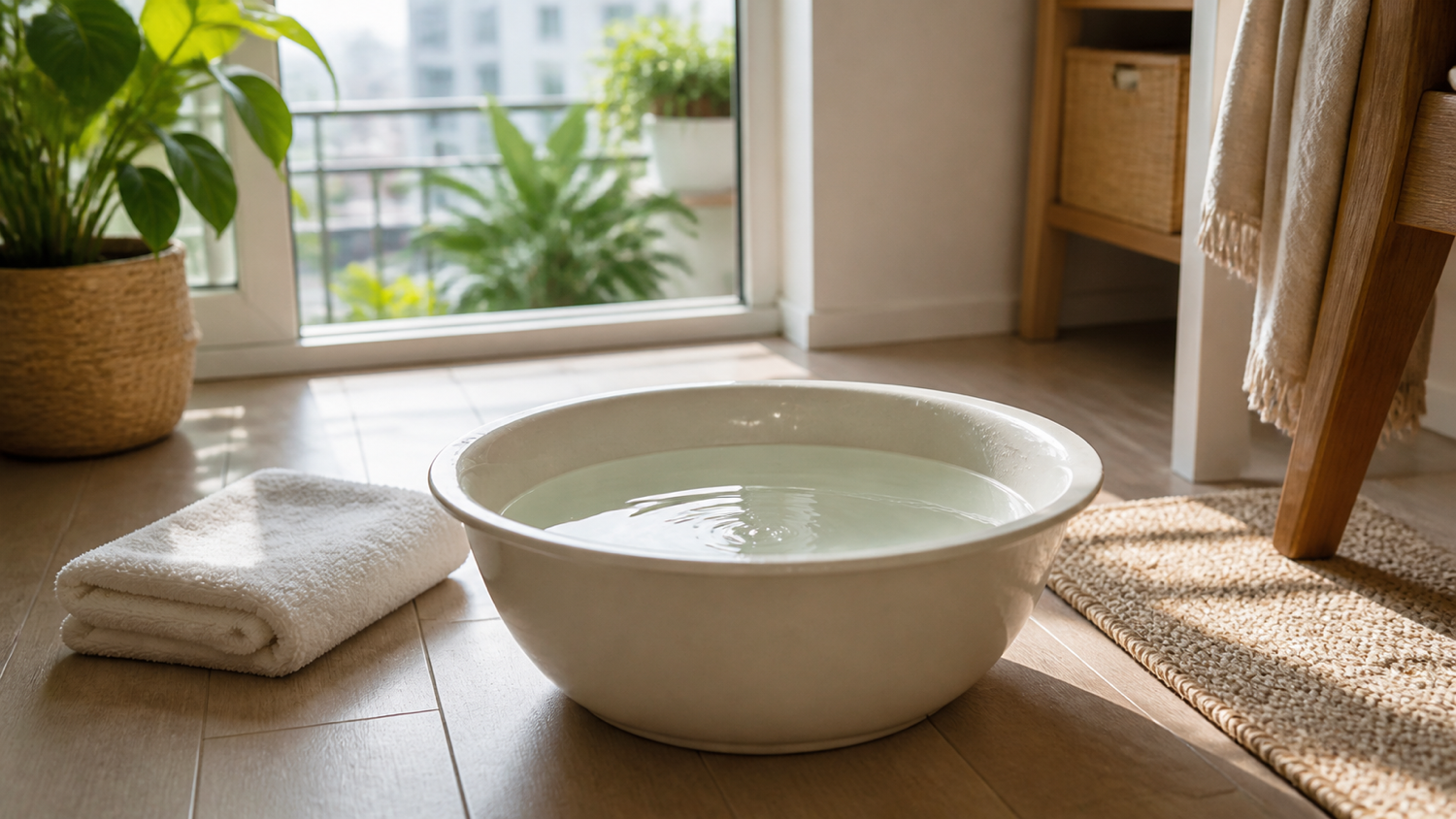
If you'd like to keep a little ritual on the Dragon Boat Festival, the simplest doable version is a single basin footbath. No bathtub required, no complicated steps.
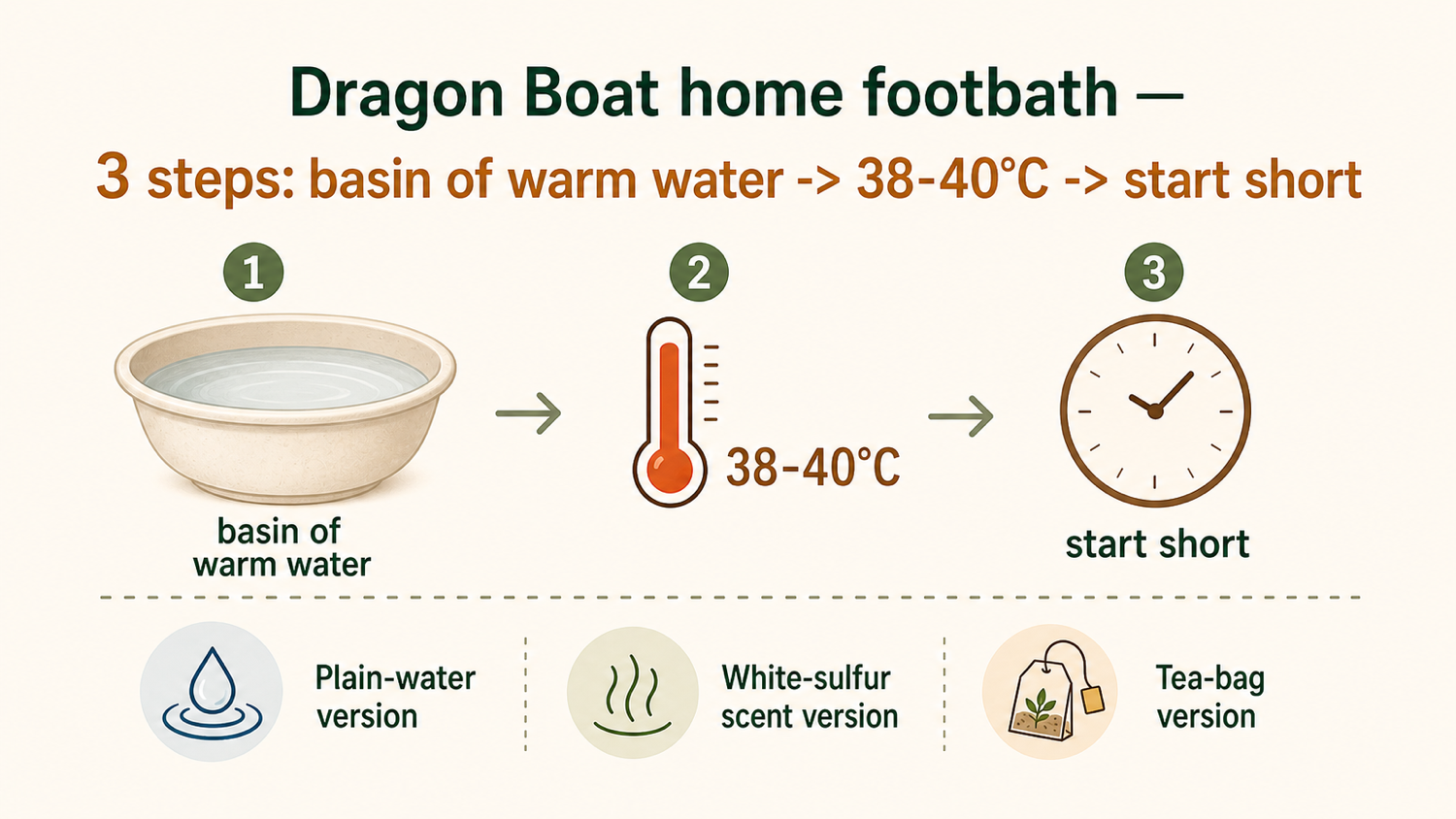
The Plain-Water Version
- Get a washbasin, a footbath tub, or any small basin you already have at home.
- Fill it with warm water at a temperature that feels comfortable, not hot. The first time, don't aim for a long soak.
- Carve out a stretch of unhurried time, sit down and soak for a while, then dry off and rehydrate a little. That's already plenty.
This plain-water footbath is, by itself, a complete Dragon Boat home ritual. You're entirely welcome to stop right here.
No Bathtub? Still Fine
What this article most wants to address isn't making the festival ritual as complete as possible — it's lowering the barrier. Many households in Taiwan, renters, and apartment dwellers simply don't have a bathtub. That doesn't mean you can't take part; it just means you don't have to make it a big production.
A small basin, a bit of warm water, and a stretch of time when no one is rushing you — that's enough to start.
If You Happen to Have DaFang at Home: A White-Sulfur Scent / Milky-Water Version
Let's be clear first: DaFang is not noon water itself, nor an amplifier of the festival custom's effects. Its role in this article is simple. If you happen to have DaFang 1956 white-sulfur hot-spring powder at home, you can turn that basin into a home footbath with more of Beitou's white-sulfur scent and a faintly milky water feel.
A few things to keep in mind when adding it:
- The natural white-sulfur scent varies in strength. That's a characteristic of the raw material, not a quality problem.
- The water may look faintly milky or take on a mineral tint. That's the natural look of mineral-bloom (tang-hua) hot-spring powder once it enters water.
- A small amount of fine sediment may settle. That's normal; just rinse the container with clean water afterward.
- For your first time, start with a small amount and find the scent strength you like.
If you'd like the full picture on dosage, water temperature, and the differences between bathing and footbathing, read the official how-to next:
How to Use White-Sulfur Hot-Spring Powder: Bath, Footbath, and Tea-Bag Format Explained
Can You Drink Noon Water?
Online you'll find plenty of claims that noon water "can be drunk" or "is restorative." Here's a clear, conservative answer:
This article does not treat noon water as a drinking recommendation. If you want to keep the symbolic "basin of water" for custom's sake, keep it within washing, footbathing, or lifestyle ritual. Where drinking is concerned, use only water that was already safe to drink, and follow ordinary drinking-water common sense; do not drink water that has been used for a footbath or that contains any bath product. DaFang 1956 white-sulfur hot-spring powder is for bathing use, not for drinking.
Dragon Boat Home Footbath Checklist
- Get a washbasin, footbath tub, or any small basin you already have
- Fill with warm water — comfortable, not hot
- Start with a short first session; no need to push through
- When you want more of a white-sulfur ambience, add a small amount of DaFang
- Rinse the container clean afterward and keep it ventilated
- Don't frame any of this as detox, sleep aid, luck-bringing, or treatment
What to Read Next
If you'd like to give that basin more of Beitou's white-sulfur ambience, here's where to go:
- Want the full how-to first: How to Use White-Sulfur Hot-Spring Powder: Bath, Footbath, and Tea-Bag Format Explained
- Want to start small: Single-Use Bath Pack
- Want fewer steps and less powder dispersion: Improved Tea-Bag Format
- Want to try one first: Free Sample: New Tea-Bag Single-Use
FAQ
What is noon water?
In folk custom, noon water usually refers to water drawn around midday on the Dragon Boat Festival, often seen as a seasonal ritual and a symbol of cleansing. It's best understood as a cultural story and lifestyle ritual, not written up as a magical effect.
Does noon water really have to be drawn at noon?
Tradition emphasizes the noon hour of the Dragon Boat Festival, but for the modern home version, what matters more is whether you set aside a stretch of time for yourself. If you genuinely miss midday, there's no need to feel pressured.
What does "Dragon Boat cleansing" mean?
You can understand it as using water, herbs, or a bath for a seasonal fresh start. The emphasis here is symbolism and a sense of ritual, not removing illness or impurity.
Can you do a Dragon Boat footbath without a bathtub?
Yes. A small-volume version in a washbasin or footbath tub is plenty. This is exactly the practical route this article most wants to address.
Can I add DaFang white-sulfur hot-spring powder?
Yes — as an option for white-sulfur scent, a milky water feel, and a home footbath ambience. For your first time, start with a small amount, and don't treat it as an effect upgrade.
Is sediment after soaking normal?
Yes. Natural mineral-bloom hot-spring powder may leave a little fine sediment; just rinse the container with clean water afterward.
I want to try a small amount once — where do I start?
You can start with the Single-Use Pack or the Sample; if convenience matters more to you, look at the Tea-Bag Format.
Further Reading
- How to Use White-Sulfur Hot-Spring Powder: Bath, Footbath, and Tea-Bag Format Explained
- Summer Footbaths Need Little Water: A Beitou White-Sulfur Footbath Even Without a Bathtub
- Natural White-Sulfur Mineral-Bloom Hot-Spring Powder vs. Common Bath Additives